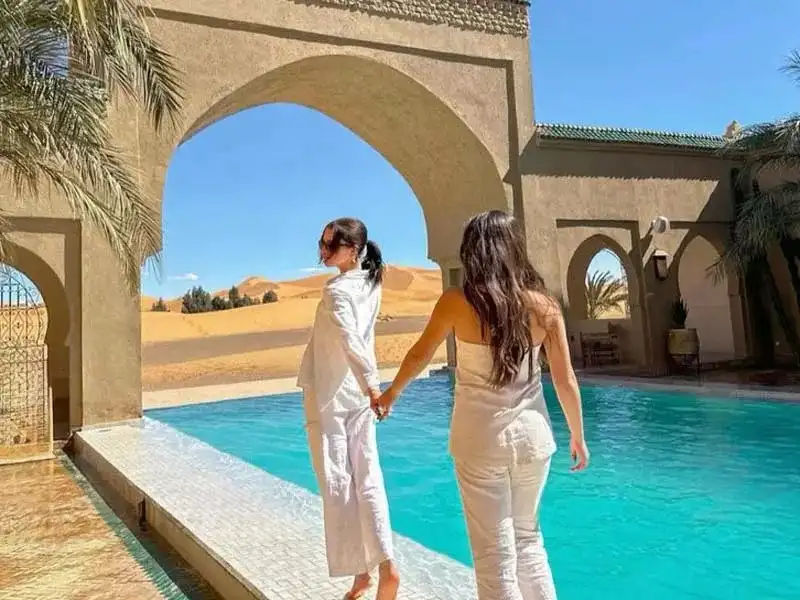
When you travel through Morocco, you will undoubtedly feel a magic that goes beyond the stunning landscapes and bustling cities. You will feel it in the warmth of a mountain greeting, taste it in the slow-cooked perfection of a tagine, and see it woven into the intricate geometric patterns of a handmade carpet.
This magic is the heartbeat of the Moroccan Amazigh people.
As a local Amazigh family and the founders of Morocco Glory Travel, we are incredibly proud of our roots. We grew up speaking the language, living the traditions, and learning the stories of our ancestors. For us, sharing our heritage with international visitors is not just our profession; it is our passion.
If you want to truly understand Morocco, you must understand its indigenous people. This comprehensive guide will take you beyond the guidebooks. We will explore the deep history, the vibrant modern identity, and the beautiful daily life of the Amazigh people Morocco is so famous for, helping you connect with our country on a much deeper, more authentic level.
Who Are the Moroccan Amazigh?
For centuries, the outside world has known us as “Berbers.” However, to understand who we truly are, you must learn the name we call ourselves: Amazigh (singular) or Imazighen (plural).
- The Meaning of Amazigh: In our native language, Amazigh translates beautifully to “The Free Man” or “The Noble People.” It is a title that perfectly captures our spirit of independence, resilience, and deep connection to the land.
- Why “Berber” is Still Used: The term “Berber” actually originated with the ancient Greeks and Romans, who used the word barbaros to describe anyone who did not speak their language. Over time, it was adopted by European explorers and historians. While Moroccan Berber is still the most commonly searched term by travelers, and we accept it without offense, Amazigh is the accurate, preferred, and proud name of our people.
- The Indigenous Roots: We are the indigenous people of Morocco and the wider North African region, living here for thousands of years before the arrival of the Phoenicians, Romans, or Arabs. Our roots are the deepest roots of this land.
A Brief History of the Amazigh People
The Amazigh history is long, complex, and fascinating. We did not simply survive the centuries; we shaped them.
- Ancient North Africa: Archaeological evidence shows that Amazigh communities have inhabited North Africa for over 10,000 years. We developed advanced agricultural systems, unique desert survival techniques, and a deep, animistic connection to nature.
- Early Civilizations & The Roman Era: We traded with the Phoenicians (who founded Carthage) and later interacted with the Roman Empire. Some Amazigh kingdoms allied with Rome, while others fiercely resisted them. We gave the ancient world prominent figures, including scholars, military generals, and even Roman emperors like Septimius Severus.
- The Islamic Period: In the 7th century, Arab armies brought Islam to North Africa. The Imazighen adopted the new faith, blending Islamic teachings with our existing cultural frameworks.
- The Great Amazigh Dynasties: Perhaps our proudest historical era was during the Middle Ages. Great Amazigh empires, such as the Almoravids (Al Murabitun) and the Almohads (Al Muwahhidun), ruled over vast territories spanning from the Senegal River, across all of North Africa, and deep into Andalusia (modern-day Spain and Portugal). We built monumental architecture and fostered eras of incredible intellectual and artistic growth.
- Modern Morocco: Today, Moroccan indigenous culture is experiencing a massive and beautiful revival. After decades of marginalization, the Amazigh identity is celebrated, our language is officially recognized, and our heritage is proudly displayed as a core pillar of the modern Moroccan national identity.
Where Do Amazigh People Live in Morocco?
While Amazigh people live in every major city in the country today, our traditional heartlands are defined by Morocco’s dramatic geography. The culture, dialects, and lifestyles shift depending on the landscape.
- The High Atlas Mountains: Home to the deepest concentrations of Atlas Mountains Amazigh. Life here is traditionally agricultural, with terraced farming clinging to steep mountain slopes. The people here are known for their incredible resilience against harsh winters.
- The Middle Atlas: Known for its cedar forests and rolling hills, this region is famous for its semi-nomadic shepherds and the vibrant, rhythmic music of the tribes.
- The Anti-Atlas & Souss Valley: This southern region is incredibly rich in culture. The Souss Valley is the heartland of the argan tree, and the Amazigh communities here are renowned for their business acumen, silver jewelry making, and distinct poetry.
- The Rif Mountains: Located in the north along the Mediterranean coast, the Riffian Amazigh have a fierce history of independence and a unique dialect and culture, distinct from the southern tribes.
- The Sahara Desert: The Sahara Amazigh (including tribes like the Sanhaja and the nomadic Tuareg further south) have mastered life in the world’s harshest environment. They are the historic lords of the trans-Saharan caravan routes.
Amazigh Languages
Our language is the soul of our culture. It is an Afroasiatic language, entirely distinct from Arabic. In Morocco, there are three main regional dialects of the Tamazight language:
- Tashelhit (Tachelhit/Shilha): Spoken primarily in the High Atlas, Anti-Atlas, and Souss Valley. It is the most widely spoken Amazigh dialect in Morocco.
- Central Atlas Tamazight: Spoken in the Middle Atlas region.
- Tarifit: Spoken in the northern Rif Mountains.
The Tifinagh Alphabet:
For centuries, our language was primarily oral, passed down through poetry and storytelling. However, we possess an ancient writing system called the Tifinagh alphabet. Today, a modernized version of Tifinagh (Neo-Tifinagh) is taught in Moroccan schools. You will see these beautiful, geometric letters on road signs and government buildings across the country.
In a historic moment for our people, the Moroccan Constitution of 2011 officially recognized Tamazight as an official state language alongside Arabic.
Amazigh Traditions & Daily Life
To understand Amazigh culture, you must look at how we treat one another.
- Sacred Hospitality: In our culture, a guest is considered a blessing from God. If you visit Berber villages Morocco, you will experience this firsthand. You will be invited into homes for mint tea and bread, regardless of whether you speak the language. It is our duty and honor to make travelers feel safe and welcome.
- Family and Community (Tiwizi): We are a deeply collective society. Tiwizi is a core Amazigh concept meaning solidarity or collective work. During harvest time, building a house, or celebrating a wedding, the entire village comes together to help without expecting payment.
- Respect for Elders: Elders are the living libraries of our history. They hold the highest respected positions in the family and the community, and their advice is sought on all major decisions.
- The Nomadic Spirit: While most Imazighen are settled farmers or city dwellers today, the spirit of our nomadic ancestors lives on. It is reflected in our adaptability, our deep respect for nature, and our love for travel and movement.
Traditional Amazigh Clothing & Jewelry
Amazigh clothing is highly regional, serving both practical purposes for the climate and deep symbolic meanings.
- Women’s Dress: In the Atlas Mountains, you will often see women wearing bright, colorful woven garments, often layered to protect against the cold. In the Souss region, the Tamlhaft (a large, draped cloth) is common. Women’s clothing is often adorned with intricate embroidery that signifies their tribe and marital status.
- Men’s Clothing: The traditional garment for men is the Djellaba, a long, loose-fitting robe with a pointed hood. In the desert and mountains, men wear turbans (shesh) to protect their faces from sun, wind, and sand.
- Silver Jewelry: Gold is traditionally considered bad luck in Amazigh culture; silver is the metal of choice. The most iconic piece of jewelry is the Fibula (Tizerzai), a triangular silver brooch used to fasten garments. These pieces are heavily engraved with protective symbols and are passed down from mother to daughter.
Amazigh Cuisine
You cannot talk about Morocco without talking about our food. The dishes that made Moroccan cuisine world-famous actually have deep Amazigh origins. Amazigh food is born from the earth, utilizing local, seasonal ingredients.
- Couscous: This is the ultimate Amazigh dish. Traditionally prepared every Friday, rolling the semolina by hand is a communal activity for women. It is steamed multiple times over a rich broth of meat and vegetables.
- The Tagine: The word “tagine” refers both to the conical clay pot and the slow-cooked stew inside it. The shape of the pot is a brilliant Amazigh invention designed to trap condensation and allow meat and vegetables to cook perfectly in regions where water is scarce.
- Amlou: A delicious, sweet paste made from crushed roasted almonds, argan oil, and honey. It is native to the Souss region and is usually served for breakfast with fresh bread.
- Madfouna (Berber Pizza): A specialty of the desert regions (like Rissani and Merzouga), this is a round bread stuffed with spiced meat, onions, and almonds, traditionally baked under hot sand or in a mud oven.
- Mint Tea: Often called “Berber Whiskey,” pouring and serving sweet mint tea is the universal sign of hospitality.
Amazigh Architecture
Amazigh architecture is a masterclass in sustainability and blending into the natural environment.
- Earthen Construction: Our ancestors built using what the earth provided: mud, straw, and clay. This pisé (rammed earth) technique creates incredibly well-insulated homes that are cool in the summer and warm in the snowy winters.
- Kasbahs and Ksour: A Kasbah is a fortified home of a local leader, while a Ksar (like the famous UNESCO site of Ait Ben Haddou) is a completely fortified village with communal granaries, mosques, and homes.
- Mountain Villages: In the High Atlas, villages are terraced directly into the steep rock faces, stacking almost vertically to preserve the flat land in the valleys for agriculture. They look as if they organically grew out of the mountainside.
Amazigh Music, Dance & Festivals
Music is how we preserve our history. Amazigh music is highly rhythmic, communal, and deeply poetic.
- Ahidous and Ahwach: These are the two most famous traditional dances. The Ahidous (from the Middle Atlas) and Ahwach (from the High Atlas and Souss) involve large circles or lines of men and women dancing, singing poetry in call-and-response, and playing the Bendir (a circular frame drum).
- Yennayer (Amazigh New Year): Celebrated on January 12th or 13th, Yennayer marks the beginning of the agrarian calendar. It is a time of feasting (usually a special seven-vegetable couscous), music, and celebrating our connection to the land. Recently, Morocco made Yennayer an official paid national holiday!
- Handicrafts as Art: Carpet weaving and pottery are not just functional crafts; they are expressions of female artistry. The geometric patterns woven into an Amazigh rug are actually a language, telling stories of fertility, protection, and the natural world.
Amazigh Symbols & Tifinagh Alphabet
If you travel through Morocco, you will see one symbol everywhere: ⵣ.
- The Yaz Symbol (ⵣ): This is a letter from the Tifinagh alphabet. It represents the “Z” sound in “Amazigh.” But more than a letter, it is the universal symbol of the “Free Man.” It depicts a person standing proudly with arms and legs outstretched to the sky and earth.
- The Amazigh Flag: The flag beautifully represents our geography. It features three horizontal stripes: Blue for the Mediterranean and Atlantic coasts, Green for the Atlas Mountains, and Yellow for the Sahara Desert. In the center is the red Yaz symbol (ⵣ), representing the blood and resilience of the free people.
Amazigh Culture in the Sahara Desert
The Sahara is not just empty sand; it is a living cultural landscape. The Sahara Amazigh are the ultimate survivors and guides of the desert.
- Nomadic Traditions: For centuries, Amazigh nomads guided massive camel caravans across the Sahara, trading salt, gold, and spices. Today, while many have settled in oasis towns, true nomad families still move with their herds of camels and goats across the dunes and hamadas (rocky deserts).
- Desert Hospitality: In the harsh environment of the desert, hospitality is a matter of survival. When you visit the dunes of Erg Chebbi in Merzouga, you are stepping into this tradition. The guides who lead your camels and play drums around the campfire at night are sharing a lifestyle that has existed here for millennia.
How Travelers Can Experience Authentic Amazigh Culture
At Morocco Glory Travel, we believe the best trips are those where you connect with the people. Here is how you can experience our culture respectfully and authentically:
- Visit Amazigh Villages in Morocco: Take a day trip or a multi-day trek into the High Atlas Mountains. Walk through the terraced fields of the Imlil or Ourika valleys.
- Stay in Local Guesthouses: Instead of international hotel chains, stay in a locally owned Dar (guesthouse) or Kasbah.
- Share a Meal: Join a cooking class run by local women, or accept an invitation for tea. Sit on the floor, eat from the communal tagine with your right hand, and enjoy the conversation.
- Explore Local Weekly Markets (Souks): Every region has a weekly market day (e.g., Tuesday in Amizmiz). It is a fascinating, unfiltered look at local commerce, agriculture, and socializing.
- Travel with Local Guides: When you hike the mountains or ride into the Sahara, choose a company (like ours) that employs local Amazigh guides. You won’t just get directions; you will get stories, history, and genuine friendship.
Common Misconceptions About the Amazigh
- “Berber and Amazigh are completely different peoples.” False. They are two words for the exact same people. Amazigh is simply the correct, indigenous term.
- “Amazigh culture only exists in the desert.” False. While we love our Sahara heritage, the vast majority of Amazigh people live in the Atlas Mountains, the fertile valleys, and modern coastal cities.
- “All Moroccans are Amazigh.” Morocco is a beautiful blend. While a significant percentage of the population has Amazigh roots, Morocco is a diverse synthesis of Amazigh, Arab, Andalusian, Jewish, and Sub-Saharan African heritages.
- “Amazigh traditions belong only to the past.” False. Our culture is incredibly alive. Young musicians are blending Tamazight poetry with modern rock, and our symbols are used in modern art and fashion across the globe.
Why Amazigh Heritage Makes Morocco Unique
Without the Imazighen, Morocco would be a completely different country. Our heritage is the deep, foundational layer of the Moroccan identity. It is why Moroccan Arabic (Darija) sounds different from Middle Eastern Arabic—it is heavily influenced by Tamazight grammar and vocabulary. It is why our food is unique in the Arab world, and why our architecture looks like it was born directly from the earth.
To experience Morocco without acknowledging its indigenous heart is to only read half the book.
Discover Amazigh Morocco with Morocco Glory Travel
As an Amazigh-owned company, sharing our “Glory” is our life’s work. When you book a journey with Morocco Glory Travel, you are not just getting a driver and a vehicle; you are being hosted by our family.
Whether you want to trek through the remote Atlas Mountains Amazigh villages, sleep under the stars in a traditional Sahara Desert camp in Merzouga, or simply learn how to make the perfect cup of mint tea, we weave our heritage into every itinerary. We promise to show you the real Morocco, guided by the descendants of the free people.
Frequently Asked Questions (FAQs)
Conclusion
The Moroccan Amazigh culture is not a relic in a museum; it is a vibrant, living, breathing force that pulses through the mountains, deserts, and cities of our country. It is a culture defined by extraordinary resilience, profound hospitality, and a beautiful, enduring connection to the natural world.
We encourage you to look beyond the standard tourist sights on your next trip. Learn a few words of Tamazight, share a tagine in a mountain village, and listen to the stories of the desert. When you embrace the heritage of the Imazighen, you unlock the true, glorious soul of Morocco.
From our family at Morocco Glory Travel, we say Mrehba (Welcome) and Tanemmirt (Thank you). We cannot wait to show you our home.